Saturday, March 3, 2018

5 Things as We Turn to March


So, here are five things that I thought about or that happened this week. Most of which had to do with school.

1. It was group picture week. This may be my favorite school based picture ever. Complete with photobomb by the photographer.


2. No matter the amount of work and effort you are putting into a fixed path, sometimes straying from it can lead to magic. Here’s to Ms. Burkhart.


3. Those moments you know that they are thinking of you. This week one student made me a Nintendo Switch out of modeling foam. Thursday I got a random hug from another on my way into school. Then on Friday a student informed me that he convinced his parents that he couldn’t leave for a trip a half hour early because we had a delay and he didn’t want to miss my class.


4. Boys are still weird and this girl’s drawing depicts it in the most accurate fashion possible.


5. As difficult as it can be to have my kids at my school at times, moments like sitting with my daughter in her new dress on picture day make it worth it.


Thursday, March 1, 2018

Crossing Line For Learning


So, when I started teaching I had come fresh from college and being part of improv comedy. I slid right into a sage on the stage role. I joked for a while that I was my students favorite cartoon character. Then, thanks to an amazing battle axe of a math specialist, I realized the strength in self discovery, especially in math and I shifted to more of a coach and less of the know it all.

That brings me to this activity. Over the days leading up to this activity we had learned how to measure angles using a protractor. The next step in the state of Ohio (and most core states) is to find missing angles in intersecting lines. I ventured onto Pinterest (something my wife laughs at me about because I used to be resistant to it) and found a wonderful activity where you put masking tape on tables and have students measure the angles. It also works out nicely with our districts push for flexible furniture. My whiteboard tables were perfect. This was just what I needed to establish the rules of finding missing angles. A quick trip to Target and $6 later I had a colorful combination of intersecting lines.

The kids were interested the moment that they came in the door that day. A few of them were sad to find out that it was not for science as they go to another teacher for math. At the beginning of class we took a few minute to review using protractors. Then I explained what I wanted them to do.


As we started the activity, I moved from table to table watching the students measure the angles and I waited. One boy said it first, “Mr. Renard, when I measure…” I cut him off giving him a smile and saying, “Not yet. Just wait.” He smiled understanding. From another table, “Mr. Renard, when I measure the angles…” Again, I held out my hand with a reassuring smile to stop the girl from finishing her sentence. “Hold that thought.” A minute of two later, from a third table. “Hey, angles add up to 180.” I moved over and said, “Huh, cool. Be ready to share.”


Finally, a young lady at my last table called me over and said “Mr. Renard, this angle and this angle are the same.” That's what I was waiting for. I called for my classes attention and asked them to gather around the table. Choosing to allow this last student to share what she had discovered in order to build her confidence, I encouraged her to share what she found with the class. “The angles that are across from each other are the same.”

“How can they be the same? They are separate angles.” I said.

“I mean they are equal.” Wording matters to me.

Exaggerated look. “Huh! Well, how about that? Did anyone else find anything?”

Another student. “Yeah, angles along the lines add up to 180 degrees.”

I looked at the work of one of the student and got wide eyed, “What sorcery is this?! Anyone else?”

Another young man, “Yeah, all of the angles add up to 360 degrees.”

Me, “Everytime?”

Another student, “I think so.” I gave them time to confirm this and watched a student or two see the direction things were going and make some changes by of a couple of degrees. The students all agreed. We copied down these new ‘rules’ on the board and students went back to finish up. Once each group was done they began personal assignments, but I couldn’t have scripted that conversation any better.


Looking back on it, I am mostly happy with everything. My students are getting better and better with just doing the crazy things that we do in class. I am really encouraged by their willingness to share their thoughts, even if they might be wrong. One thing that I noted to do next time I try the activity is to maybe take pictures or if time let students compare by doing a round two. Though the more I think about it, the trickier I think it would be.

Saturday, February 17, 2018

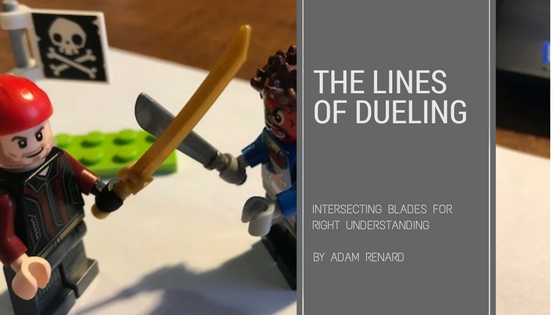
The Lines of Dueling


Recently, in my math class we shifted gears. I realized that I was following a regiment that I was not comfortable with and as a result they were not meeting goals that I had for them. I adopted a very time specific format of content lesson, personal growth and performance task attack time. The goal is to challenge them on all fronts. That said, I realized if I was going to spend less time with the direct instruction, then my lesson time was going to have to be on point, engaging and all in.

After adopting a pirate theme for the class (more on that another time), I reworked my first two geometry lessons to teach point, line, segment, ray and angle using a treasure map. This though, was the one I was waiting for. My students need to learn about intersecting, parallel and perpendicular lines. To do this we practiced our swashbuckling before hitting the seven seas.

To begin, I modeled what parallel, perpendicular and intersecting lines looked and they made their own drawings. We made observations before defining of each one under their pictures. Then I told them, “As proper pirates, we never know what we will encounter, so we have to be handy with a blade. Savvy?” They are still adjusting to my pirate talk. I then passed out a yard/meter stick to each students. At first, they were confused and then came the smiles. They realized that I was planning to allow them to do what every child assumes is the true purpose of these measurement tools; use them as a sword.


Before starting, I gave strict warning that I had many fun activities planned, but if they could not handle this, then it would impact what we can and cannot do. I asked them to stand a find a partner and I joined the extra student. We put the tips of our blades on the ground and I explained that I would count to three. With each count they needed to tap blades with their partner. Then, I would shout parallel, perpendicular or intersecting. They would use their blades to match the command. It was all smiles.

We played four rounds switching partners each time. Each round it was fun to watch different combinations of kids work together as they tried to line up their “swords” in at exactly the right angles or make sure they were straight and never crossing. There was so much laughter and excitement as they waited for the next command. After our final round, I had students return to the page where we had defined the sets of lines and add doodles of people sword fighting using the lines they had already drawn as the swords.


They loved it. They were able to describe and draw the lines. They worked in partners to physically create the lines, collaborating so that they got them just right. It was a super great little lesson; memorable and active. Now, on to measuring angles by analyzing the x that marks the spot and rotations of Olympic snowboarders. I wonder if my principal would mind me constructing a halfpipe in the classroom? So many ideas, so little time.

Wednesday, February 14, 2018

In the Battle of Heroes vs Villains


Existing with and inside of a curriculum can be difficult. Especially for someone who wants to innovate and push the envelope constantly. This year, our district adopted a new curriculum for science: Amplify. I have had ups and downs with curriculum, especially scripted curriculum. I will say that Amplify has been pretty cool. Best of all though, is it lends itself very well to gamification. The two seem to compliment each other.

At the the end of each chapter, the students have to write a scientific explanation or argument to respond to the chapter’s main question. In a gamified classroom this would typically be a boss battle, in which students answer questions correctly to defeat the “boss” (the test). Tom and I tried that out, calling the parts of the rubric, the bosses hit points. It never felt quite right though. Writing does not lend itself well to the boss battle concept. After some discussion we decided that for our final paper of unit two, we would try something different.

Our game is based on Superheroes, but at the beginning of the year we allowed the students to decide if they were a hero or a villain. It was a decision we had not emphasized to this point. During this unit the students took on the role of conservation biologist in order to save Tokay geckos in the rainforest who were dying. Over the course of the unit students learned that street lights had been installed in the area were making it hard for the geckos to see because of their high sensitivity light receptors.

Tom and I choose to emphasize their affiliations of heroics of villainy in their final explanations in order to foster both competition and unity. For the heroes, they would write the explanation as they would have before, but they also had to add a solution to save the geckos and still protect the drivers. The villains on the other hand would write their normal explanation, but need to include a plot to use what they had learned to push the geckos in the area into extinction. Each paper would graded on the same rubric. Then we would take all the heroes scores and all the villains scores and average them out. To the winning side: 200XP on the leaderboard.

There was palpable excitement in the room as we broke this down for the students. We explained it and shared our expectations. We told them that if they wanted to share their papers with others on their team to get feedback, they could. This practice encourages teamwork and support. We also asked that their plot not be things like throwing all the geckos into a volcano, or getting rid of the highway altogether. They went to town, and it was crazy, y’all. There was real feedback and support as both weaker writers reached out to ones that they knew could offer constructive criticism.

After grading them, the students wrote some really great papers. Many students making their best efforts of the year. In the end, my favorite part was the plots to save or get rid of the geckos. We had heroes that suggested using lights that would dim or brighten based on motion sensors and building walls around the highway to limit stray light. We had villains that suggested installing additional street lights in between the existing streetlights and cutting down some of the trees near the highway to maximize the reach of the light being generated. Of all 74 students, whose papers that I read, only one did not base their plot around the information we learned about light and vision. Our final averages were heroes with 8.9 and villains with 8.4. The craziest part was that in three of our five classes the villains actually won. It came down to one weak performing villain group that did not work together, to give the heroes the victory. Talk about a teachable moment in cooperation.


There were some tiny things I will change when (not if) we do it again. Like setting the room up with heroes on one side and villains on the other. Making sure Tom and I used the exact same rubric, we had a small difference in point breakdown. We may allow sides to use a power up that pulls players to their side through “mind control” or “redemption”.

That said this was a huge success. Students were motivated, helpful and encouraging to one another. My favorite part of all of it though, was kids coming up with solutions that focused on the information they had worked so hard to learn. That is our goal, right? To have them apply what they learn to solve problems. This put the students in a position to really consider how we make problems better or worse. This took a fairly straight forward explanation one step further and made them apply their knowledge, which is the best display of learning I could ask for. It was amazing.

Saturday, February 10, 2018

Operation! I'm the Doctor for You!


Last year when working with order of operations, I had a fun idea to have the kids look problems that were wrong, and fix them. When setting it up I drew the large pictures of patients who were sleeping. On each one I placed an incorrect problem and had the kids move around the room and ‘fix the patient.’ This year, in fourth grade I don’t go as in depth with that concept. However, my students are getting their first go at both long division and multiple methods of double digit multiplication. So it seemed like a good time to pull this activity out of my pocket and put it into practice.


I set up six stations; three with long division mistakes and three with multiplication mistakes. For multiplication I opted to use both the standard algorithm and the box method. The mistakes I highlighted were the same mistakes I had seen from the students. The students that had displayed a good understanding of the process through exit tickets and class practice could move around freely as they diagnose each patient and complete the problems correctly. The few students who were still having troubles would work with me to complete the six problems first, and then they could match the work to the patient and figure out what they did wrong.


On the day of the activity I had students fold a piece of paper in half. One half of the paper was for their diagnosis and the other half was to complete the problem correctly. The free moving students worked very well moving from one station to the next. One or two of the problems stumped the students because the mistakes were tricky to notice. Every student got through at least five of the six students. Working with the students who had difficulties also seemed to go really well.


That said, we only had about 35 minutes to complete the activity. So I was not able to get through all of the equations with the students I was working with. Also, while I had time to go over the answers, I did not have enough time to go in depth with the mistakes in the problems each patient had. I have already noted to myself the need for a full class for this activity the next time.


What I like about this activity is that the classroom transformation immediately sets a tone that this will be different. Students usually rise to a different atmosphere. In a dream world they all get scrubs, clipboards and face masks. For a first effort in Ohio, this went pretty well.

Wednesday, February 7, 2018

Breaking Out of the Norm


It has been a long time since I tried to blog. I think too much about what I am trying to say. So here is a different approach inspired by a few amazing Twitter friends. First topic, a digital breakout.

Tom (my amazing partner in crime and coleader of the our Science Heroes Classroom game) and I started our new unit with Amplify science about Earth features. However, I had to take my son to the dentist. I thought I would use this as an opportunity to try my hand at a gamified approach to being out; a digital breakout.

If you don’t know, a digital breakout is a set up where students work through different puzzles or challenges to get keywords or numbers which open locks to finish a challenge. Digitally, this can be created on Google site using forms. It takes some work but the results (if done right) are pretty cool.

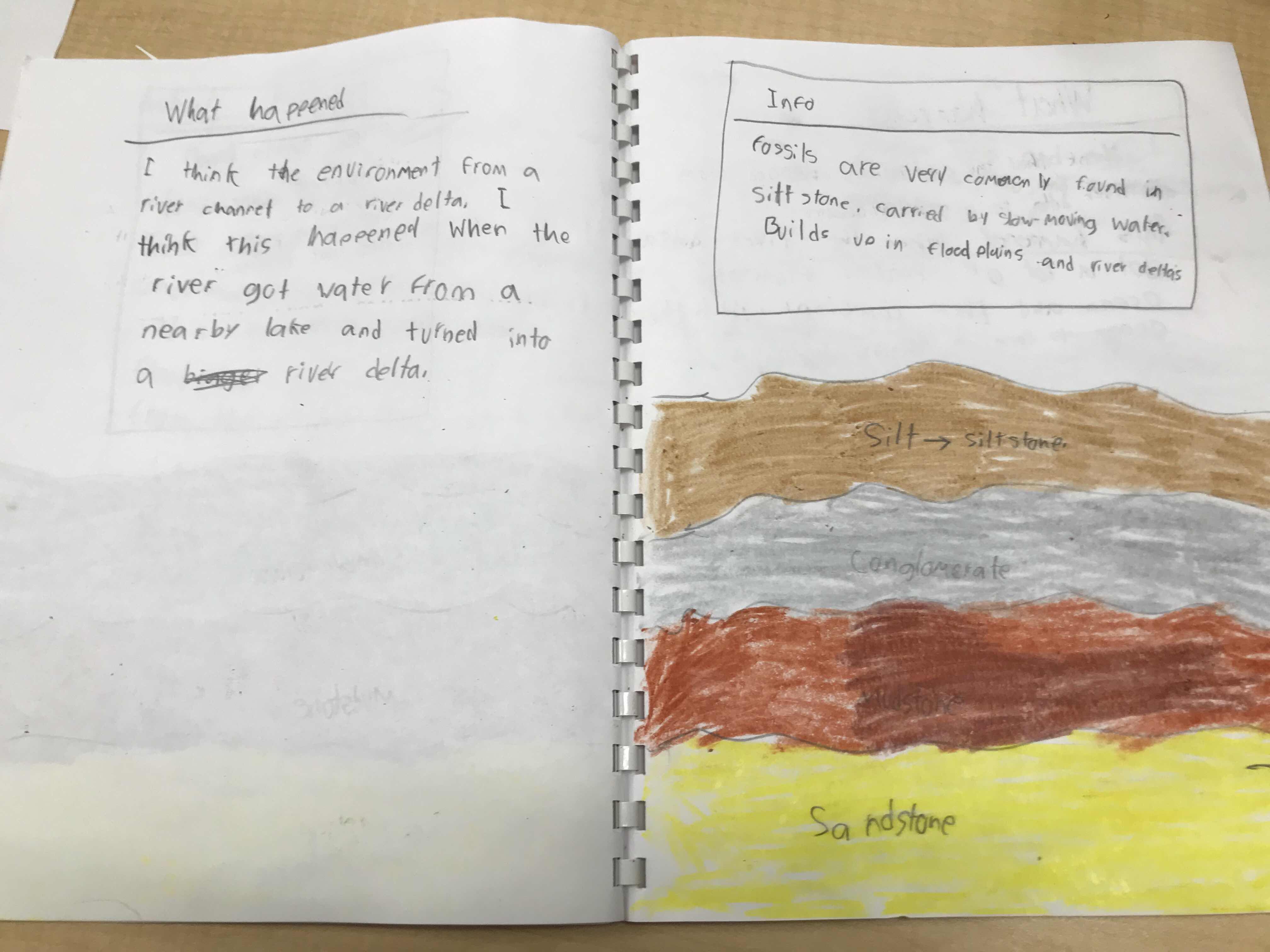
I started by watching an amazing video by Meagan Kelly (found here) and just began building. After putting together the Science Heroes website and playing around a lot with Google Forms as exit tickets it wasn’t all that hard to put together and I learned a thing or two about answer verification, which is awesome. Tom suggested four locks for our first go. Our initial key was found in an article about Sue, the big T-Rex fossils in Chicago. Correct answers provided the key. For key two, I pushed them to a puzzle online which needed to be completed to help answer questions. Key three found students having to rearrange a web address in google slides to find a site to help them get the answers. The final hid a link in a picture, that gave them the information that they needed.

Tom, Guy (our awesome media specialist) and my wife all tested it for me. This was a huge blessing as we were able to catch a few problems and make it hum. I highly recommend you get people to try it first.

You can find the breakout here.

Look at this crew working hard.

I set it up for my sub, and only a few kids were able to finish during class. My intention was to give them some more time when I was there the next day, but to my surprise a few of them went on to finish that night at home. When I got back I was greeted by many kids saying that they wanted more time and asking when we would do this again. The locks all seemed to hit just the right notes and none were too easy or difficult. The activity provides the students with a solid foundation for the unit, giving them some introduction in to layers of rock, fossils, and the area of the country we are focusing on.


So intense.

On the flip side, I never want to miss being there when I unleash it on them again. I missed their initial triumphs, and while I got to experience many of them beaming with pride when they finished the next day, it would have been nice to be there for it all. Also, while I think this was a great introduction to this sort of activity, they can handle a lot of challenge and come through. That perseverance is so key to teaching the grit. Going forward I want to work in a video and maybe add some more cross curriculum elements, but it was definitely worth the time to learn and build going forward.

Saturday, July 22, 2017

(Em)Powering Up my Students

A little background, coming out of college and moving to Roanoke, I got really deep into a collectible card game called Marvel VS System. It was an especially nerdy time in my life. Yeah, let that one sink in for a second. I really enjoyed all aspects of it. Collecting, building decks, and especially getting together with people to play. So when I read about the item concept in Explore Like a Pirate, my mind was immediately drawn to it. It is becoming a bit of an obsession.


I dabbled in power ups/items last year just try my hand at it. My kids liked them. They liked having them. They liked when they were random drops during class. They liked earning them by doing things. The items added to the game, which added to class. Having the items also meant that I was not bribing the students with candy and other stuff. They earned items that pointed them back toward the class. However, there was more to it than that. It gave them power to impact the class. Empowerment has a huge impact on students investment in a classroom. If students can impact little things that matter to them, they will care more about what happens in class.


That brings us to this summer, and I am all in. My awesome new partner Tom and I are incorporating a superhero theme for our science classes, which I will pull into my math class in a slightly different way thanks to an excellent idea from Justin Willetts, @jwilletts12 on Twitter. A big component of that will be our collectible Power Up cards. Students will all be getting a baseball card sleeve to keep an inventory of 9 cards. They can hang on to the cards, trade for ones that suit their personality, or use them in different class situations.


Currently, I am using the website GoDeckYourself.com, which allows for the creation of your own cards. It has templates that are easy to use and offer different choices. Personally, though, I have some design philosophies that I hold to.
  • One, there have to be cards that appeal to all types of learners. Cards that will affect my explorers, socializers, achievers, and a term I have borrowed to call my griefers, philanthropist.
  • Two, and this is important to me as the father of a girl, my cards must feature female superheroes as well. This can be tricky, as comic book art is not extremely tactful all the time.
  • Last, there have to be commons, rares, and unicorns. Cards that many of the students have, cards that not every student will have, and cards that only a few will get the entire year. Those unicorns, man, they have to be special.

Here is a taste of what my fourth graders are in for.
Common Sample #1
Whoops, as labeled, is geared toward my explorers. Kids who are excited to learn...constantly, and because of that may forget to bring something to school.

Common Sample #2
Partners is a card aimed at my socializes, like me. Kids who want to share all of their thoughts, but might benefit from having a sounding board.

Rare Sample #1
Look! Up in the Sky! is a rare. About 1 in 5 cards will be a rare card because the effect will be very cool. Look! gives the students an opportunity to get involved with sharing cool things taking place in our classroom.

Rare Sample #2
Shine the Signal is for the kid who can not contain the desire to share that they know something. This card is an outlet for that kid, it gives them the opportunity to take over for a short time and be the center of attention. That said, giving them a number of uses forces them to choose wisely.

These are just some of my 12 rares and 16 common cards. I am not ready to share unicorn cards, they will be given in very special circumstances. I am also planning to introduce Villain cards or Schemes in the second half of the year, but those are only in the brainstorming stage. If you want to see the rest of the set, let me know on Twitter, I would be happy to share.